Did you brush your teeth this morning?
More importantly, have you ever wondered why?
Who told you to do that?
Your mom, probably.
But who told her? Her mom?
Keep going back, and you might assume it was the dentists.
But here’s the twist—who told the dentists?
The surprising answer is a man named Claude Hopkins.
Before Hopkins, only 7% of Americans brushed their teeth daily. After his groundbreaking campaign, that number soared to 65%.
Hopkins didn’t just sell toothpaste; he transformed a nation’s daily habits.
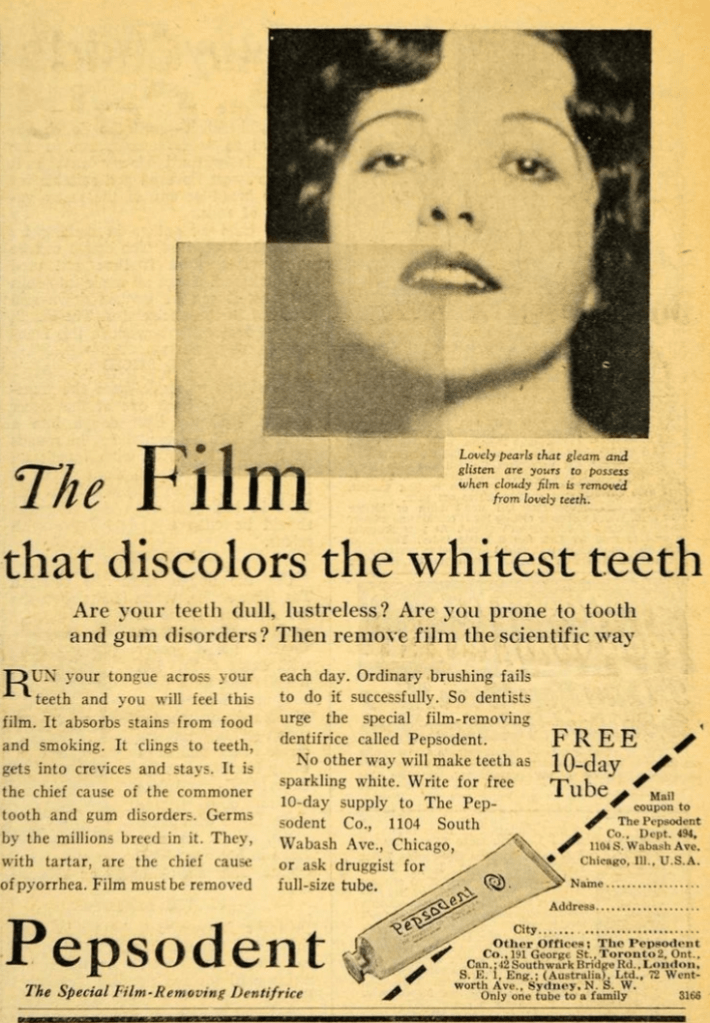
With one brilliant campaign, he turned toothbrushing into a ritual, changing not only oral hygiene but the way we think about personal care itself.
Are your choices your own, or have they been hijacked?
Hopkins invented the idea of a “film” that forms on teeth, which he described as a nasty, unpleasant coating that people could feel by running their tongues across their teeth.
In his ads, he highlighted this “film” as the root of all dental problems, even though it was just the natural coating of the mouth’s saliva and food residues.
The campaign’s genius was that once people started looking for this film, they could feel it immediately, triggering discomfort and a desire to remove it.
Marketers can hijack the minds of consumers to get them to buy products they didn’t even know they wanted.
You might be skeptical, in fact, I think you should be skeptical, skeptical of somebody making such a bold claim.
In today’s world, some of our biggest beliefs didn’t emerge naturally—they were meticulously crafted by marketing masterminds.
Behind everyday habits and social rituals lie decades-old ad campaigns designed to create culture, influence behavior, and even shape entire industries.
Diamonds Are Forever: How DeBeers Changed the Engagement Game
Before the 1940s, diamonds were merely another gemstone—luxurious, yes, but not essential.
DeBeers flipped this script with their now-legendary “A Diamond is Forever” campaign.
By connecting diamonds with the idea of eternal love, they established the notion that an engagement ring should cost “two to three months’ salary.”
This single idea made diamonds synonymous with romantic commitment, elevating them from a luxury item to an essential part of engagement culture.
Today, millions of people around the world save for months, sometimes years, to follow this “tradition” created by a DeBeers marketing team in the mid-20th century.
Breakfast, the “Most Important Meal of the Day”
The notion that breakfast is vital to a healthy lifestyle isn’t some ancient wisdom—it’s a marketing masterpiece courtesy of the Kellogg Company.
Before their “breakfast is the most important meal” campaign, people often skipped breakfast or ate light.
By positioning breakfast as essential, Kellogg didn’t just sell cereal; they changed how generations would approach their mornings, establishing a ritual still passed down today.
A Spectacle for Safety: Otis Elevators and the Public Display of Innovation
One of the most remarkable marketing feats took place not through words, but through spectacle. Otis Elevators faced a significant problem: the public feared elevators, fearing malfunctions could be fatal.
To conquer this fear, Otis staged a dramatic demonstration at the 1854 World’s Fair, having a man ride in an elevator as the cables were cut, only for the automatic brakes to catch him mid-drop.
This stunt didn’t just calm nerves; it revolutionized cities by making tall buildings feasible, forever changing urban landscapes.
Torches of Freedom: The Rise of Women Smokers
When cigarette sales plateaued, marketers realised that the next growth opportunity lay in appealing to women, who were largely non-smokers at the time. In the 1920s, marketers turned cigarettes into symbols of female empowerment, branding them “torches of freedom.”
They orchestrated events where prominent women defiantly smoked in public, casting cigarettes as a rebellious, progressive act.
The result? A shift in public perception and a significant increase in female smokers—a triumph of positioning and psychology.
“Whenever you find yourself on the side of the majority, it is time to pause and reflect.” Mark Twain
This sentiment serves as a powerful reminder, especially when we consider how many of our daily habits, beliefs, and rituals have been shaped not by personal choice, but by subtle influences around us.
Each purchase, each custom, each little ritual—it’s all part of a tapestry crafted, at least in part, by an unseen hand.
So, next time you reach for that cereal, buy a diamond, or decide to smoke:
Am I making a free choice or has my mind been hijacked?
 The Most Beautiful Game